
Wide-plank engineered oak across DA14/DA15
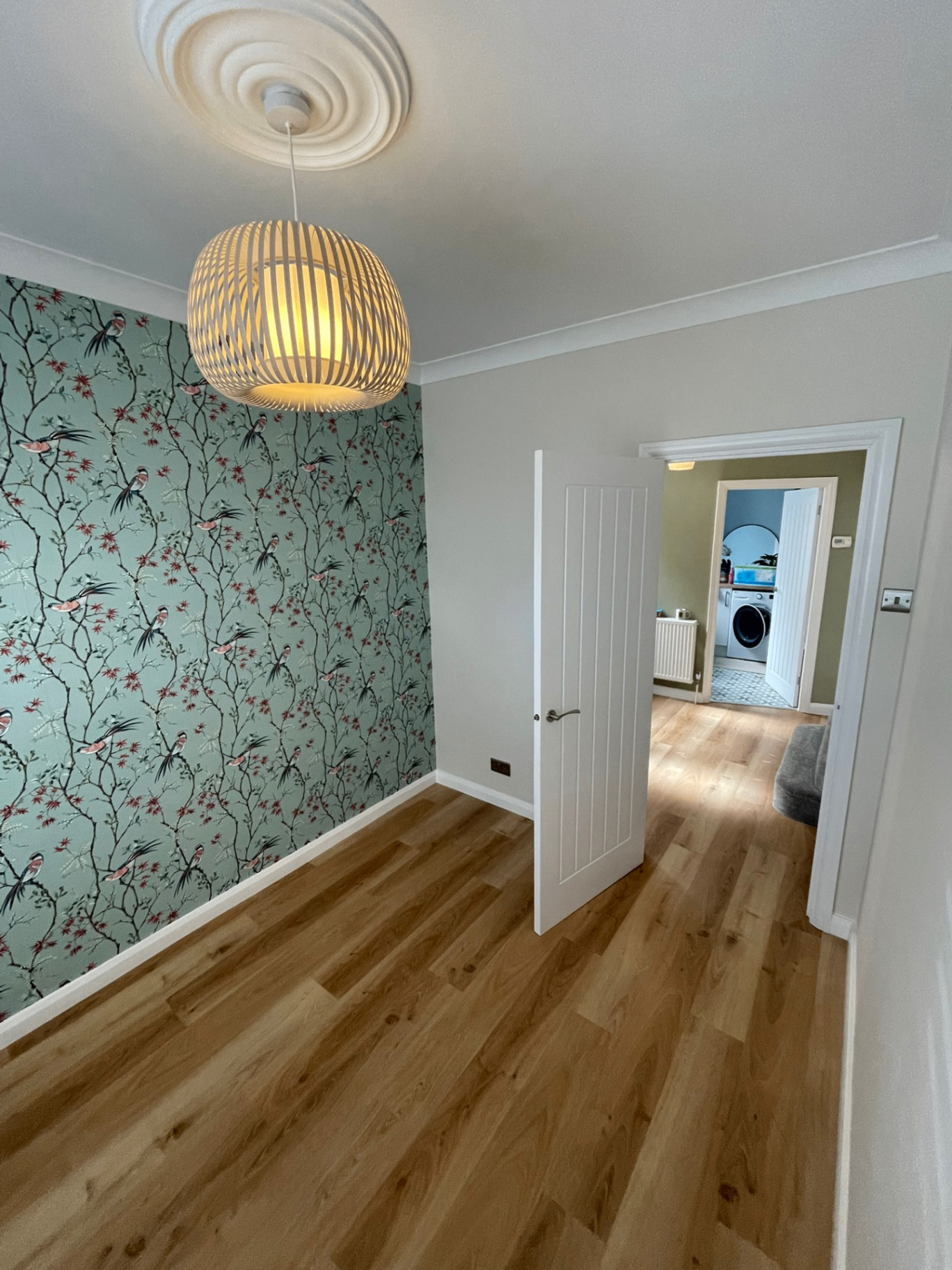
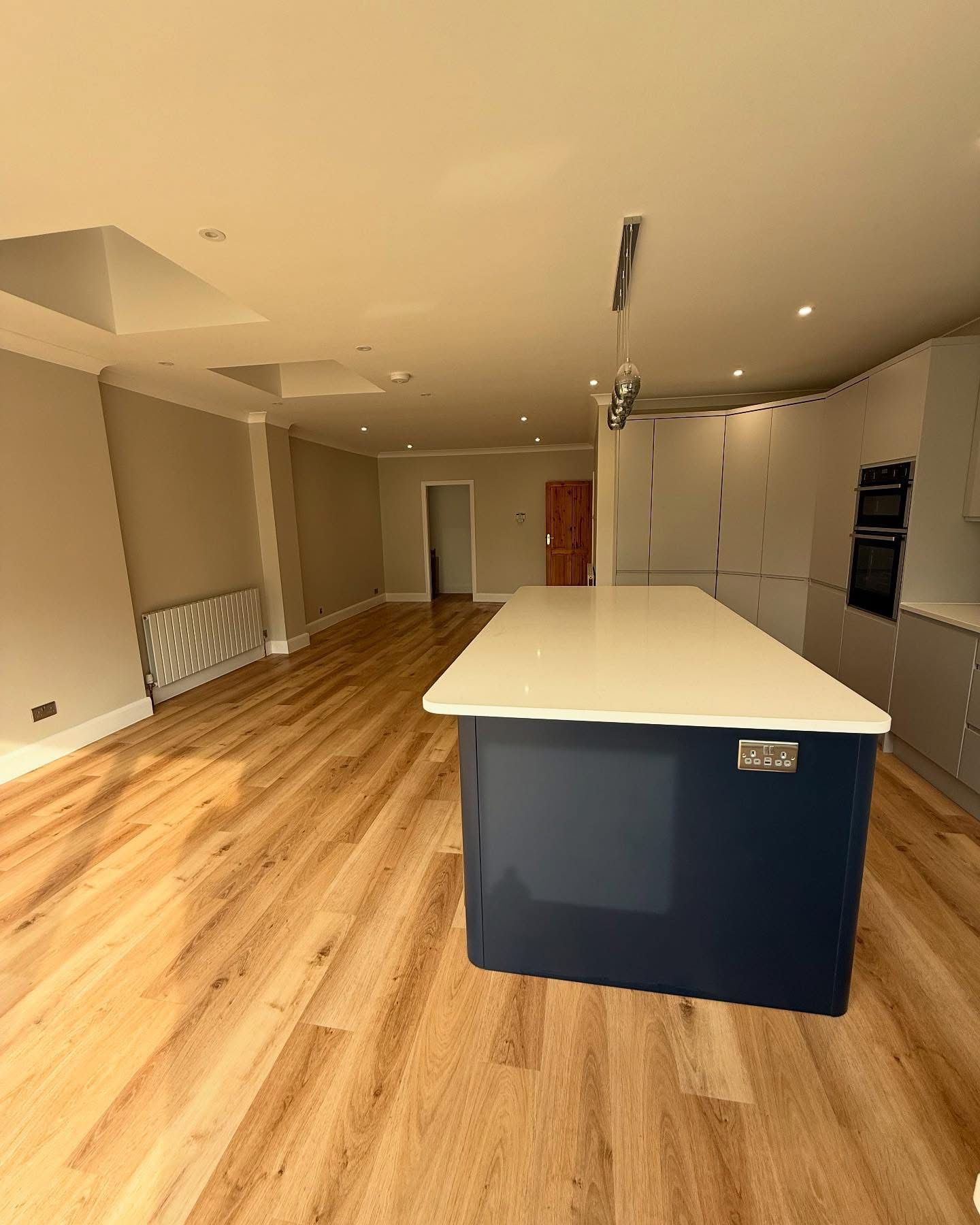
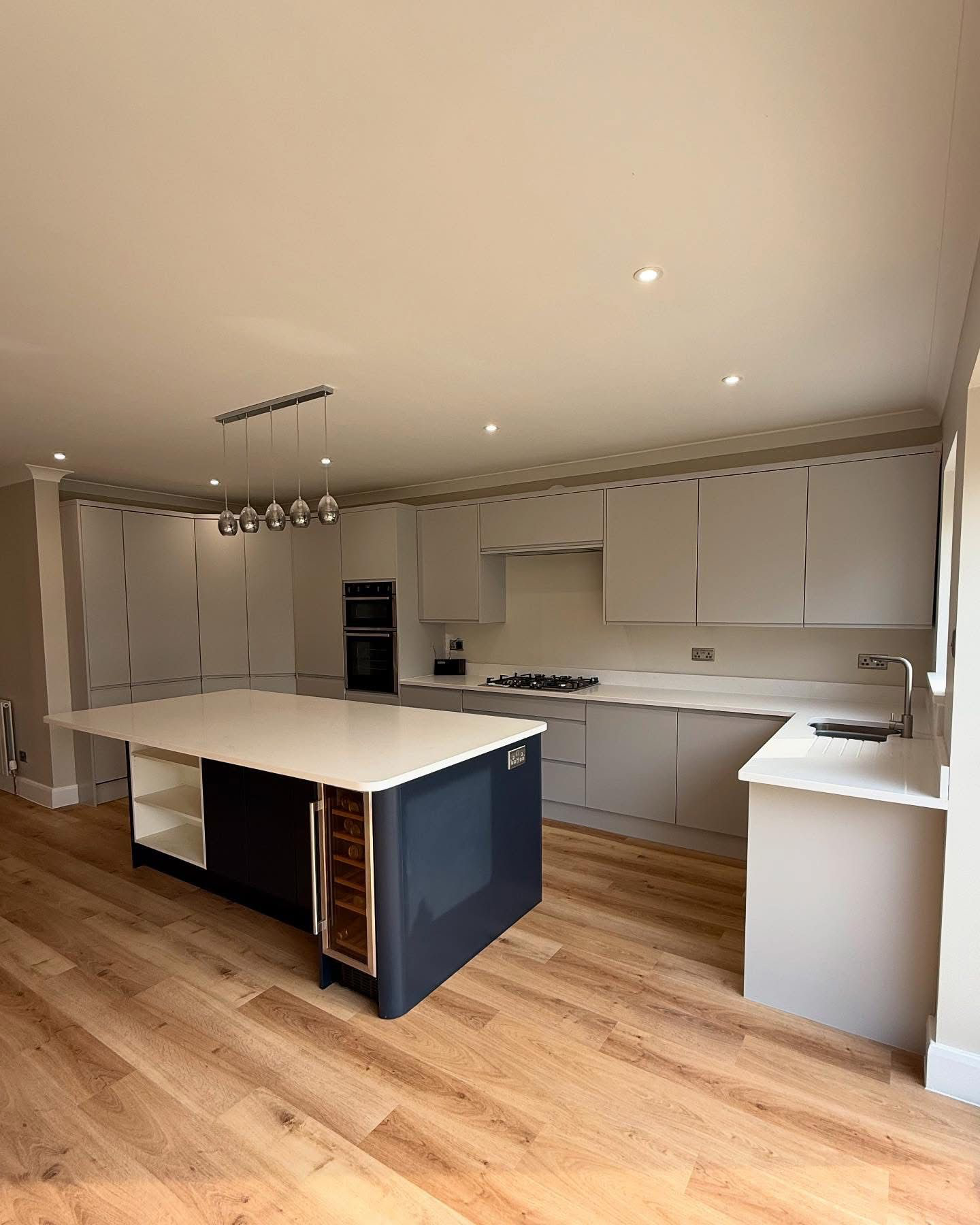
Engineered oak is real oak on a stable ply core — the top 4mm sands and re-oils like solid wood, the ply below stops it moving with the Sidcup humidity. Fitted every week across Sidcup Hill period homes.
What engineered oak flooring in Sidcup actually involves
Engineered oak is real oak on a stable ply core — the top 4mm sands and re-oils like solid wood, the ply below stops it moving with the Sidcup humidity. Fitted every week across Sidcup Hill period homes.
1930s pine boards over joists — usually need a 6mm ply overlay before LVT or vinyl.
What we check first on a Sidcup laminate job
- Expansion gaps
Click-lock needs a real expansion gap on every wall — covered by skirting or quality beading, never silicone.
- Underlay & DPM
Ground floors in Sidcup 1930s bay-fronted semis usually need a combined underlay/DPM, not plain foam.
- Stairs
Stair nosings glued and pinned — we don't recommend laminate for narrow Victorian flights.
- Real oak top layer over ply core — stable for UK conditions
- UFH-safe options with the right underlay
- Wide 190mm+ planks or classic 125mm
- Sanded and re-oiled multiple times over its life
In short — engineered oak in Sidcup from £45/m² fitted, stable and sandable.
“JT Flooring — Excellent from start to finish! Installed my carpets at my old flat and now at my new property. I have recommended to my neighbours and friends who have used his service! Fast, efficient and always gives a friendly personal service!” — Eric Ng, verified Google review
Postcodes: DA14/DA15 · Routes: the A20 · Common build: 1930s bay-fronted semis.
Covering Sidcup Hill, Halfway Street, New Eltham border.
Relevant finishes for engineered oak flooring
Engineered Oak Flooring in Sidcup — common questions
In a modern UK home with heating on year-round, engineered lasts longer because it doesn't move. Solid wins in a cool, humid environment — which is rare in DA14/DA15 today.
Yes — with UFH-rated boards (max 15mm total thickness usually) and the right underlay. We spec on the Sidcup Hill survey.
Oiled looks more natural and can be spot-repaired; lacquered is harder-wearing and doesn't need maintenance. Most Sidcup kitchens go lacquered, living rooms go oiled.
Yes — the 4mm real oak top layer can be sanded 2–3 times over its lifetime. Same wearing surface as solid oak, without the movement.