
Laminate floor repair
Laminate floor repair starts with the damaged covering and the way its boards are joined. A chipped edge, separated joint or swollen plank can call for different work, and the surrounding floor matters as much as the visible fault. Arrange a free site visit to discuss the condition, available replacement material and the practical options before a written quote is prepared.
Identify the damage in the finished covering
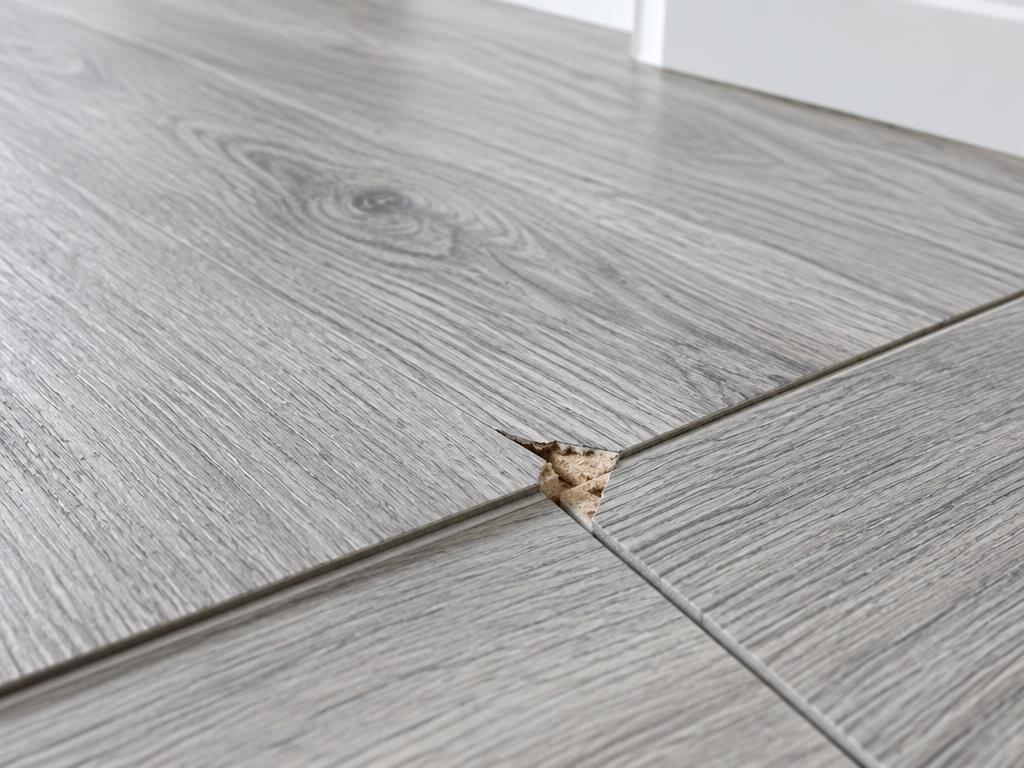
Begin with the part of the floor that concerns you. Note whether the damage sits on a board surface, at a joint or beside a doorway, and whether it affects one piece or a wider area. A photograph helps explain the location, but inspection establishes the condition of the covering and what can be reached without disturbing unrelated parts of the room.
Keep the product name and any spare boards from the original installation. Laminate ranges can differ in their dimensions, joining system and decorative finish, so a similar colour is not enough to establish a suitable replacement. The exact material needs comparing with the fitted floor before deciding how a damaged section could be dealt with.
Consider how the boards can be reached
Click-fit laminate is assembled as a joined floor. Reaching a damaged plank may involve lifting boards back from a wall rather than taking out only the visible piece. The location of the damage, the direction of the layout and the condition of the connections affect that work. Access should be assessed before treating a small damaged area as a small fitting task.
Skirting, scotia and doorway trims can also influence the route into the floor. Discuss fixed furniture and any room boundaries that restrict access. The quotation should include the finishing work associated with the agreed repair, not just the board itself. A considered plan accounts for the coverings and trims that need lifting and refitting around the affected area.
Check why the problem developed
A repair decision should look beyond the decorative surface. Movement in the supporting floor, unevenness or a problem at the perimeter may need attention before replacement boards are fitted. Describe any changes you noticed before the damage appeared, such as a joint opening or a doorway becoming tight. Those observations guide the inspection without deciding the cause on their own.
Moisture-related swelling needs considering separately from a chipped edge. The condition of adjoining boards and the source of any moisture matter when assessing the next step. Replacing a visible piece should be planned with the surrounding condition in mind, rather than assuming new material alone resolves whatever affected the original floor.
Keep floorboard preparation and surface repair distinct
Squeaky floor repair on this site concerns loose-board preparation beneath new flooring. Laminate repair concerns the finished covering above the base. If noise or movement is part of the problem, both layers may need inspecting, but they should be described separately in the scope. This helps make clear whether the proposed work addresses the surface, the supporting floor or both.
A broader replacement can be more practical where damage extends across the room or suitable matching boards are unavailable. Compare that option with a local repair, including the effect on adjoining coverings and finishing trims. The choice should reflect the condition and appearance of the whole floor, not simply the size of the first fault noticed.
Agree the repair scope and room arrangements
Tell us about furniture, access and any areas that cannot be cleared. The work may need room at a wall or doorway away from the damaged board, depending on the layout. Agree handling arrangements before work starts and keep spare material available for checking. These details allow the fitting plan to reflect the actual room rather than an isolated patch.
A useful written quote identifies the proposed repair, replacement material, lifting and refitting, any preparation and the finished edges. Discuss the expected appearance and return to use alongside that scope. Our laminate installation page explains the replacement alternative, while the squeaky-floor page covers preparation of moving boards beneath a new covering.
Laminate floor repair questions
Can one damaged laminate board be replaced?
That depends on access, the joining system and whether suitable replacement material is available. A click-fit layout may need lifting back from a wall to reach the affected board.
Should I keep spare laminate boards?
Yes. Keep the product details and spare boards available for assessment. Their dimensions, finish and connections can be checked against the fitted floor before replacement is planned.
Is laminate repair the same as fixing squeaky floorboards?
No. Laminate repair addresses the finished covering; squeaky-board preparation addresses movement in the supporting floor. Inspection establishes whether one or both layers need work.
What affects repair time and cost?
Access to the damaged area, the extent of lifting, matching material, preparation and refitting trims all affect the scope. The survey establishes those items before the quote and work sequence are agreed.