Kitchen Flooring Supplied & Fitted: LVT, Vinyl & Laminate
For most kitchens we recommend glue-down LVT, because the surface is waterproof and it can be laid as plank or herringbone. Sheet vinyl is the budget-friendly waterproof option, and laminate can suit a dry kitchen-diner. We supply and fit all three after a free site visit.
LVT, herringbone, sheet vinyl or laminate
LVT plank. Our usual kitchen recommendation. Glue-down LVT is hard-wearing, has a waterproof surface and comes in wood and stone effects that run happily from kitchen into dining area.
Herringbone LVT. The same material laid in a zig-zag, set out from a centre line. It suits a long kitchen-diner where you want the floor to be a feature. See our herringbone flooring service.
Sheet vinyl. One piece, waterproof and easy to clean, which makes it strong in small kitchens and utility rooms. Details are on our vinyl flooring page.
Laminate. The lower-cost route to a wood look, best in a dry kitchen-diner rather than right by the sink. Our laminate versus vinyl for kitchens guide sets out where each wins, and the best flooring for kitchens guide compares the wider field.
Cutting round the parts that make a kitchen awkward
Kitchens have more edges than any other room: plinths, an island, the end of a run of base units, pipework to a sink or radiator and the threshold into the next room. With LVT we dry-fit the layout first, so the plank direction and feature cuts are decided before any adhesive goes down, then scribe each cut to the units. Sheet vinyl is templated so the sheet is cut cleanly before laying.
One of the jobs in our gallery, an LVT floor fitted around a kitchen island, shows why the planning matters: the lines run through without awkward slivers at the island ends.
Why kitchens so often need levelling
Kitchen floors are frequently a patchwork. An extension slab meets the original floor, old tiles have been lifted leaving adhesive behind, or pipe runs have been filled by hand. Thin glue-down LVT and sheet vinyl both follow the base closely, so dips and ridges show through. Moisture readings come first, then levelling where needed. That work is described on our floor screeding page.
Wear layers and what the quote covers
With LVT, the wear layer is the figure that decides how long a kitchen floor looks good. We describe 0.55mm as the sensible standard for kitchens, halls and family living spaces, with 0.3mm better left to a spare room. Our LVT thickness and wear layers guide explains the numbers. Whatever you choose, the written quote lists the product, any levelling, the cuts and scribes around units, door bars, standard furniture moved and replaced, and clean-up with dust-sheet protection, so you can compare it fairly against others.
Typical kitchen-diner costs
Our pricing page gives a kitchen-diner of around 18 m² as £810 - £1,080 in LVT and £395 - £630 in laminate, supplied and fitted. Herringbone, levelling and the number of cuts round units move the figure, which is why every kitchen is quoted in writing after a free site visit. The quote includes uplift and disposal of the old floor, door bars and clean-up.
Kitchen floors from our gallery
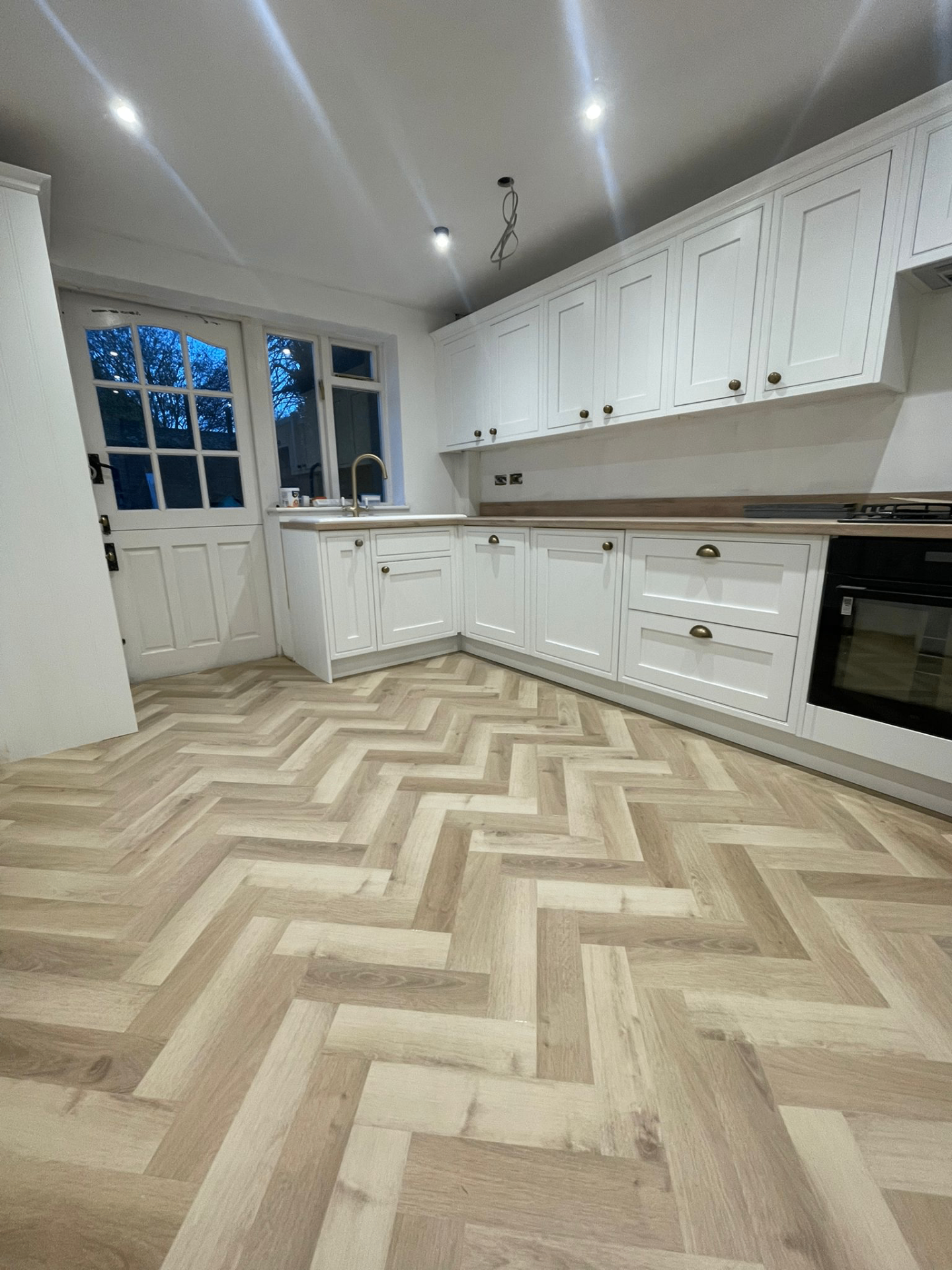
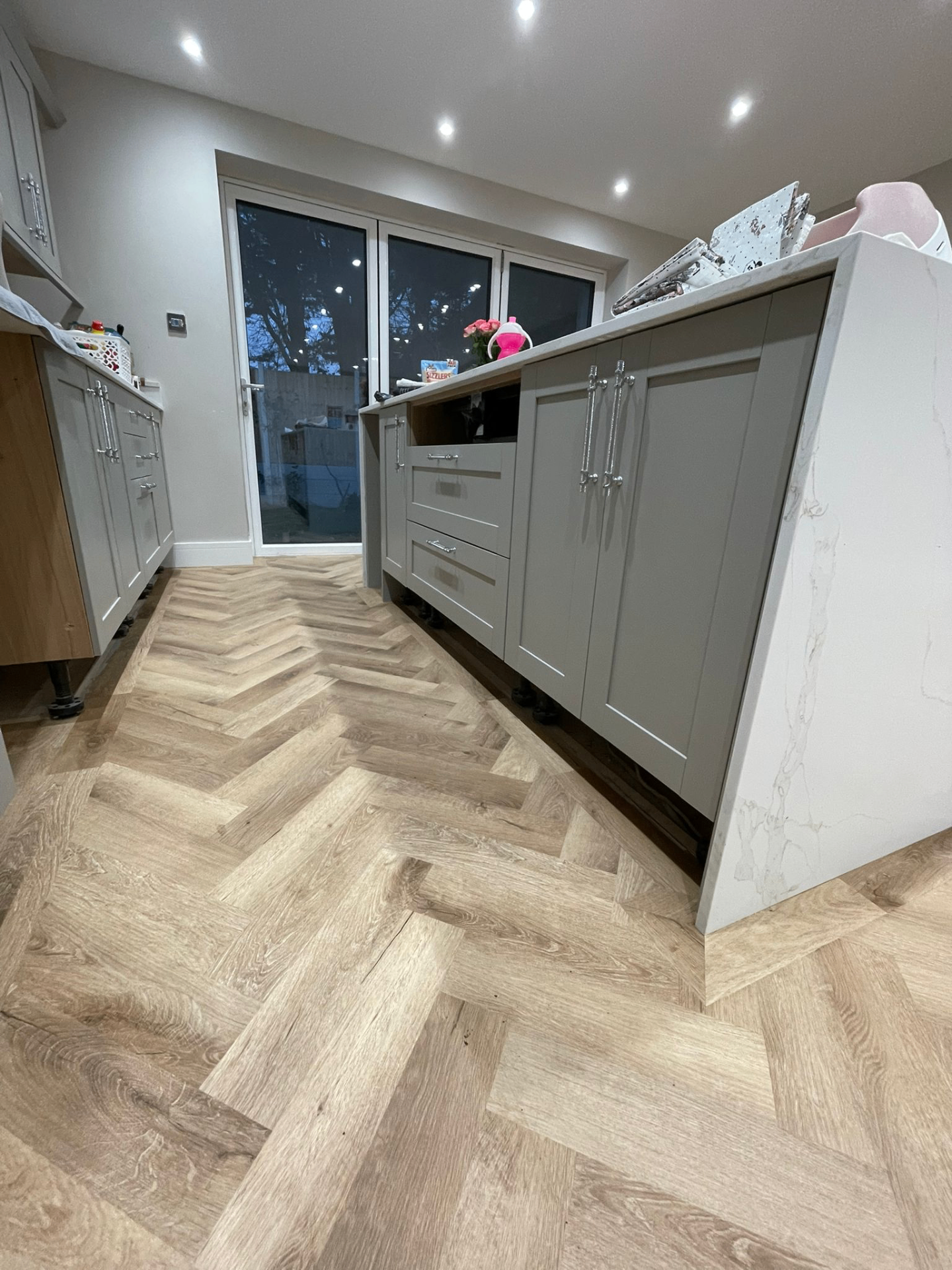
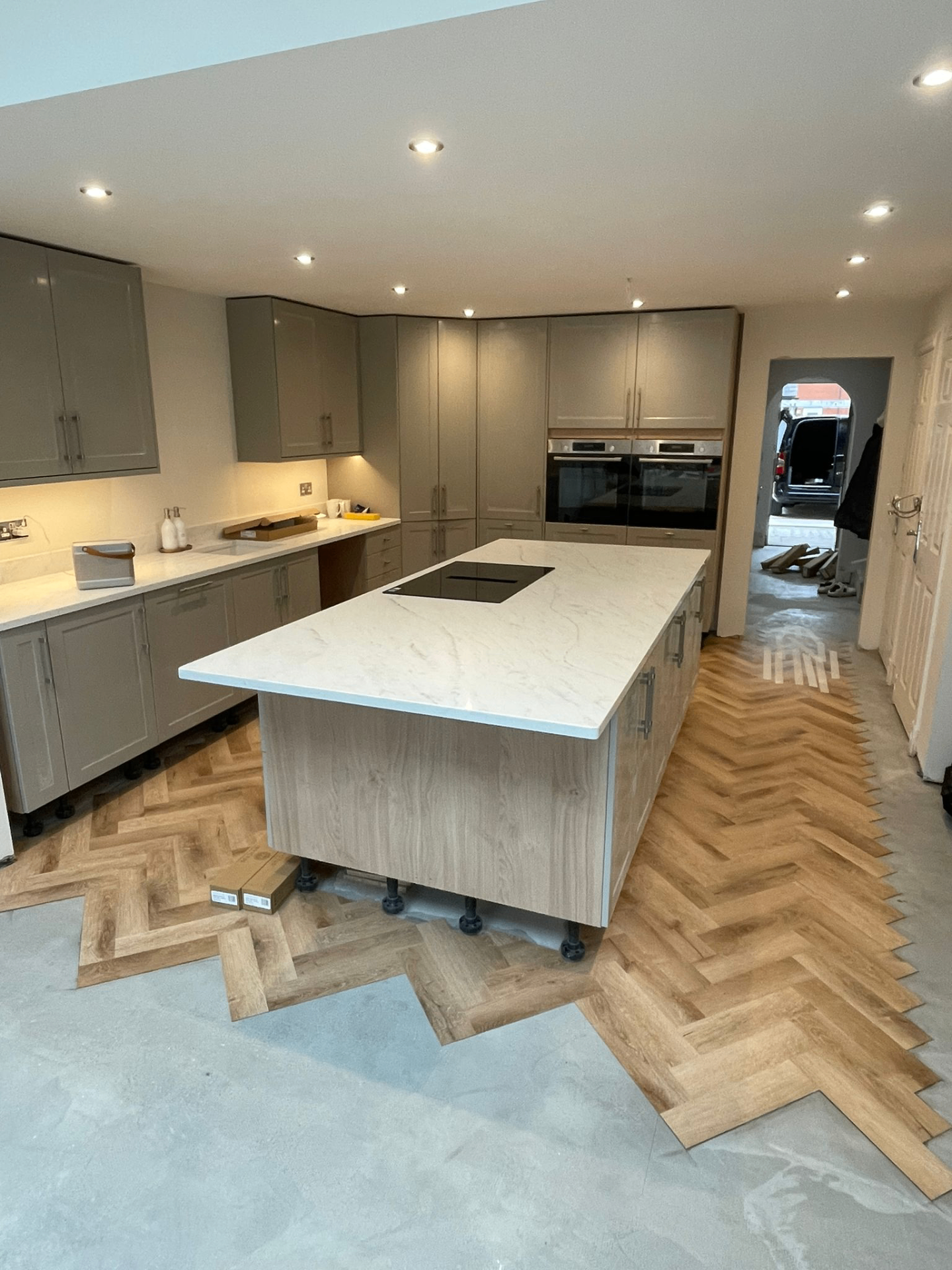
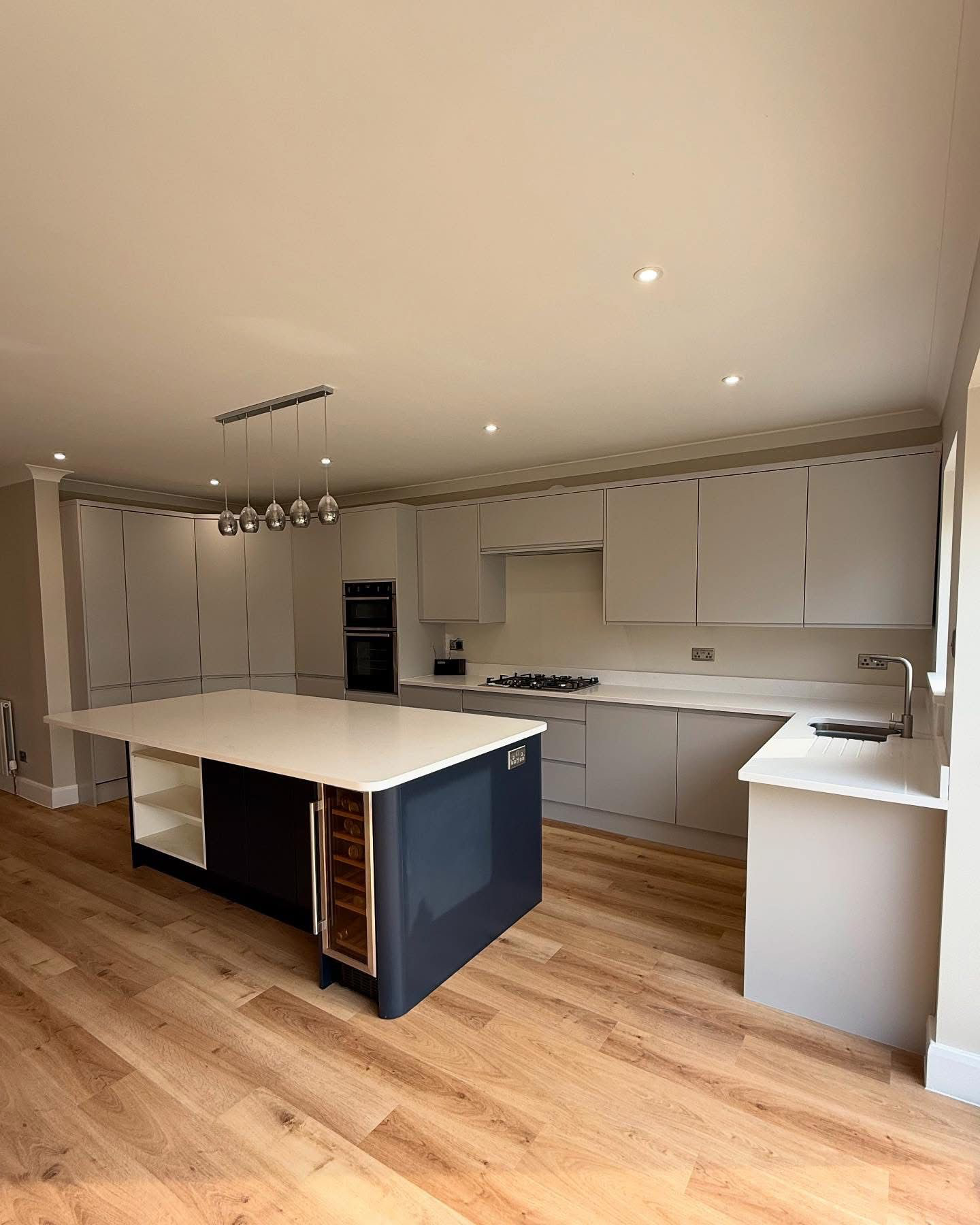
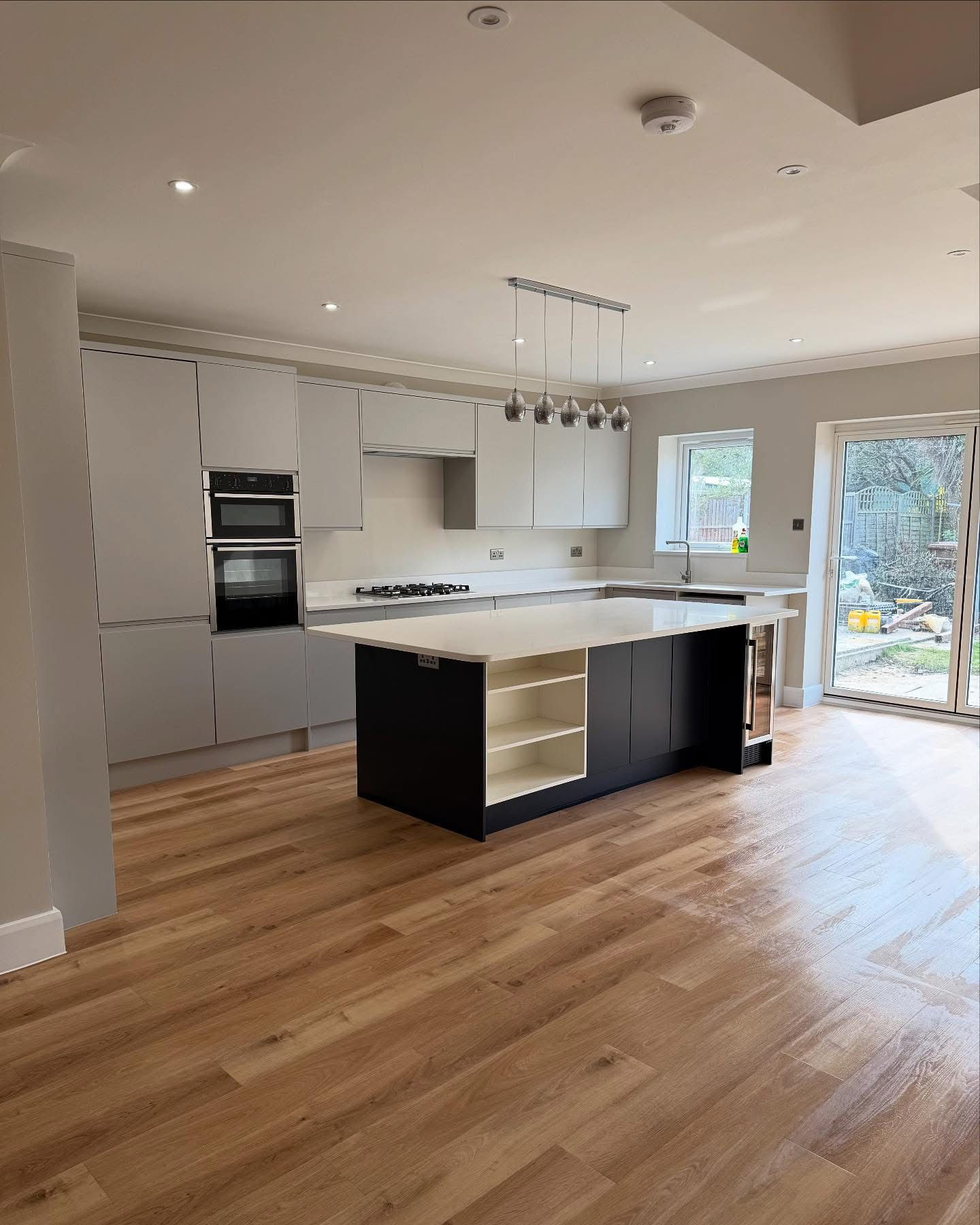
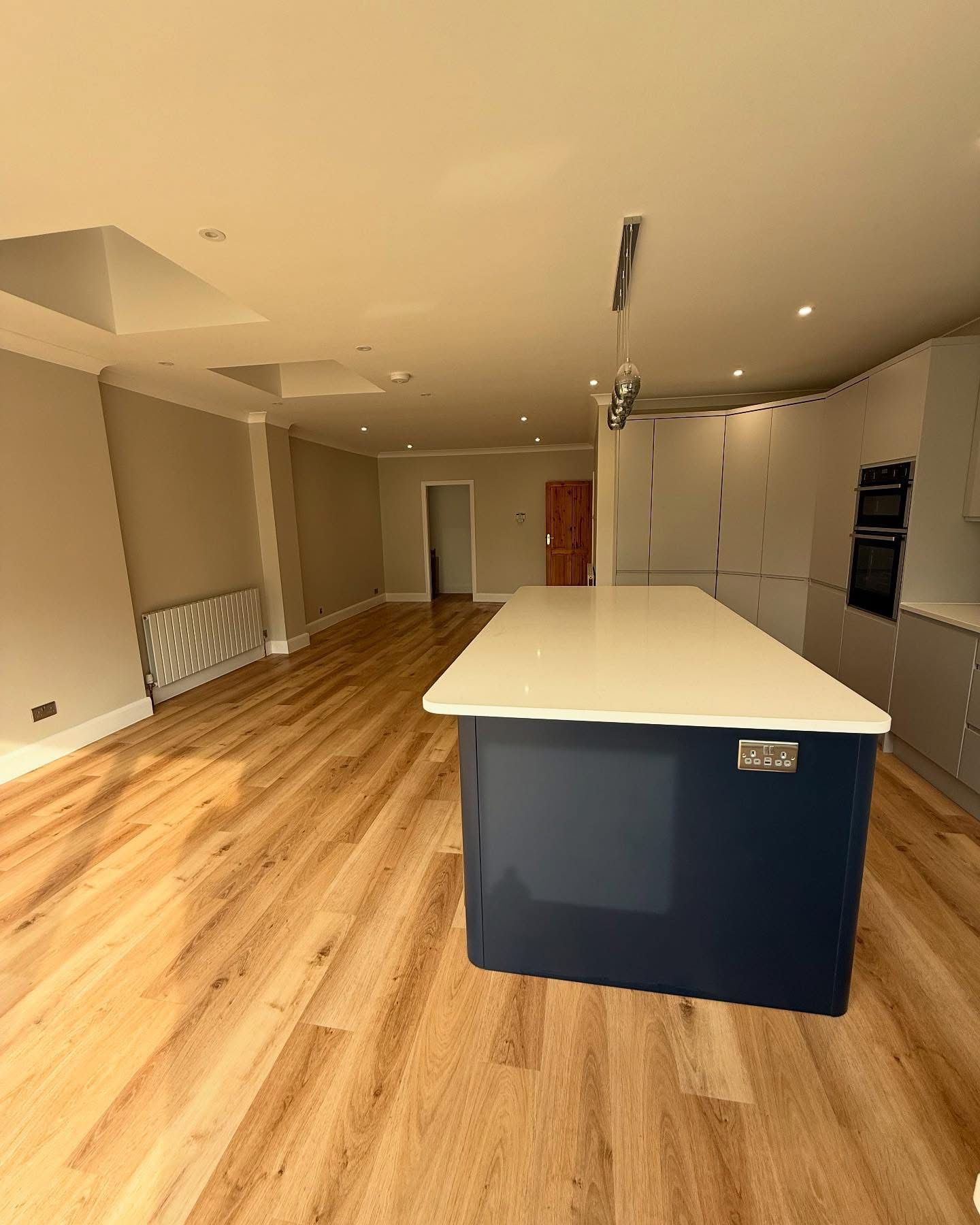
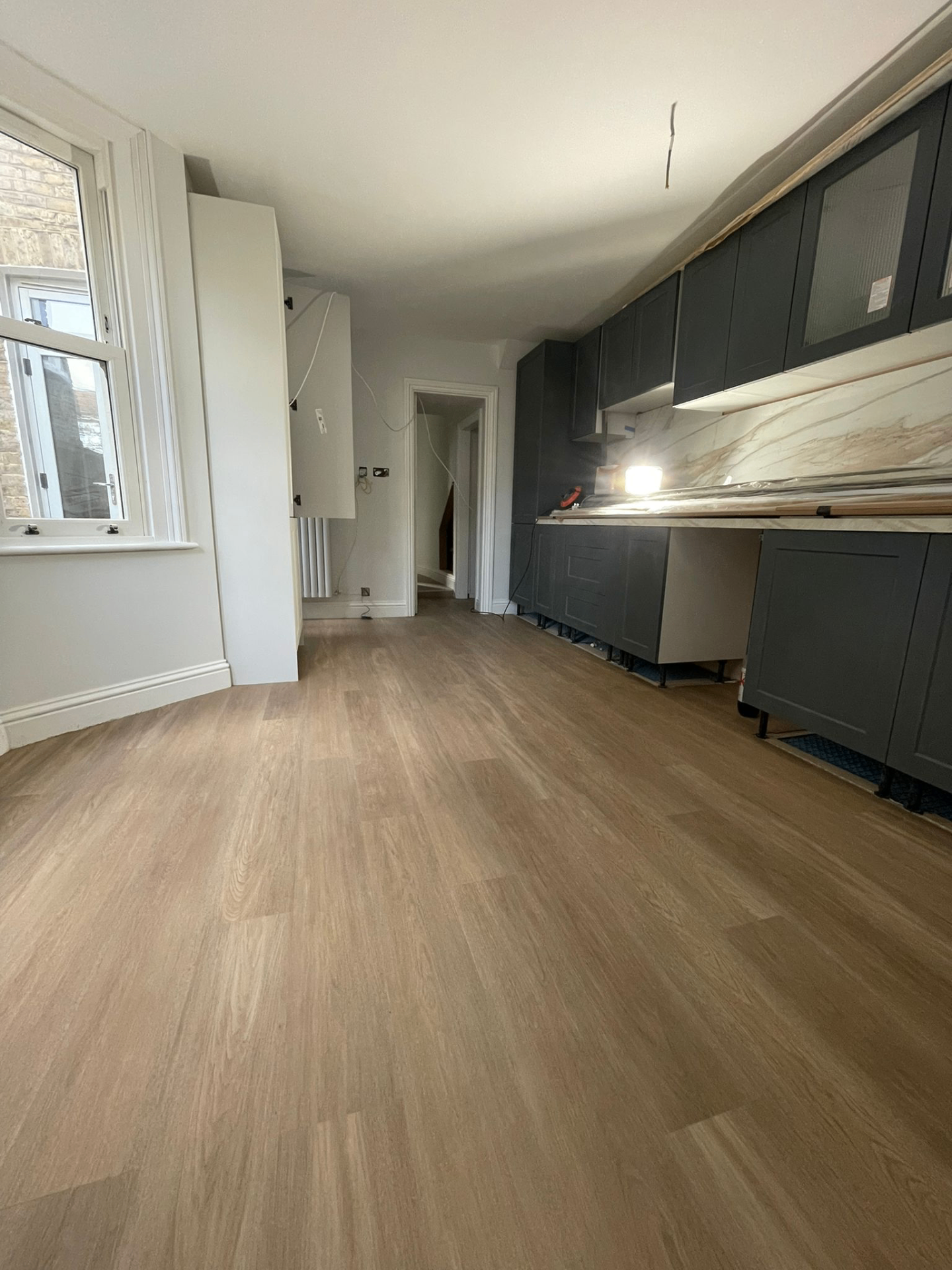
Kitchen flooring across Kent and South East London
Kitchen flooring questions
Is LVT or laminate better for a kitchen?
For most kitchens, LVT. Glue-down LVT has a waterproof surface, whereas laminate has a wood-based core that can swell if water sits at a joint. Laminate costs less and can work in a dry kitchen-diner, but where spills are regular we point people towards LVT or sheet vinyl.
Do you fit around kitchen units and islands?
Yes. LVT cuts are scribed to the plinths and island, and sheet vinyl is templated around units and pipework first so it lands right the first time.
Can herringbone go in a kitchen-diner?
Yes. Glue-down herringbone LVT has the same waterproof surface as plank, and it can bring order to a long kitchen-diner. It needs a flatter subfloor than straight plank, so levelling is planned in.
How long is the kitchen out of use?
A sheet vinyl kitchen is commonly finished in a day and can be walked on once fitted. With glue-down LVT we tell you how long to keep heavy items off while the adhesive sets. Any levelling adds time and is shown on the quote.
Is sheet vinyl still a good kitchen choice?
Yes, particularly in compact kitchens. It is waterproof, easy to clean and goes down with few or no seams. Cushioned vinyl is softer underfoot, though it can dent under a heavy appliance foot, so a thicker wear layer helps.